.svg)
.svg)
.svg)
.svg)

.png)
You spent two hours yesterday trying to figure out if your email subject line was good or terrible.
This morning, you stared at your Instagram analytics for twenty minutes, completely unsure whether to post more Reels or focus on something else entirely.
Here's the thing nobody tells you about running your own marketing: the hardest part isn't the tactics. It's having nobody to ask.
You may be a founder building a business, or a solo marketer at a small company, or a freelancer managing your own clients. The harsh reality is that there's no marketing team backing you up, no creative director to review your work, and no colleagues to workshop ideas with.
Instead, you have Google giving you seventeen different answers to the same question, AI tools that generate mediocre copy, and that nagging feeling that you're missing something.
Marketing communities exist to solve this specific problem. The problem of "I'm doing this alone, and I need someone who understands marketing to tell me if this makes sense."
This article explains why joining a marketing community matters when you're handling everything yourself. Everything we mention is backed by research on what happens when solo marketers and business owners connect.
The Real Cost of Marketing Alone
Let's start with what isolation actually costs you.
When you're the only person handling marketing, every decision takes longer. The constant second-guessing slows you down. Hours disappear into researching tactics that may or may not work for your specific situation. And you end up testing things that someone with more experience could have told you wouldn't work from the start.
But there's a deeper cost that's harder to measure. Marketing alone is mentally exhausting. You're constantly wondering if you're doing it right. And this uncertainty creates paralysis.
Campaigns sit in draft mode because you're not confident they'll work. You default to safe, mediocre marketing instead of taking risks because there's no one to validate bolder ideas. And the isolation compounds over time. The longer you market alone, the more disconnected you feel from what's actually working in your industry right now.
What Actually Happens When You Join a Marketing Community
Before we talk about why you should join a marketing community, let's look at what actually changes when solo marketers and business owners connect.
The most immediate impact is speed. According to Bettermode's 2025 research on online communities, 80% of people participate in professional communities specifically to share information and help others solve problems. This creates a collective knowledge base where someone has probably already figured out whatever you're stuck on.
Need to know if your pricing page is clear? Post it in a community and get feedback within hours instead of agonizing over it for days. Wondering whether to invest in paid ads or focus on content? Ask people who've tested both for businesses like yours.
But communities provide something more valuable than quick answers: they give you perspective on whether you're focusing on the right things. When you're alone, it's easy to spend weeks perfecting your logo when your real problem is that nobody understands what you actually sell. A community helps you see the difference.
And perhaps most importantly: communities give you confidence. When experienced marketers tell you your idea makes sense, you stop second-guessing yourself. When someone validates that yes, your messaging is clear, you actually launch the campaign instead of rewriting it again.
Five Reasons Solo Marketers And Small Business Owners Need Community
1. You Make Better Decisions Faster
Every day you delay a marketing decision costs you. Whether it's launching a campaign, changing your positioning, or investing in a new channel, indecision is expensive.
Marketing communities dramatically accelerate decision-making. Instead of reading twelve conflicting blog posts about email frequency, you hear what's actually working for businesses similar to yours.
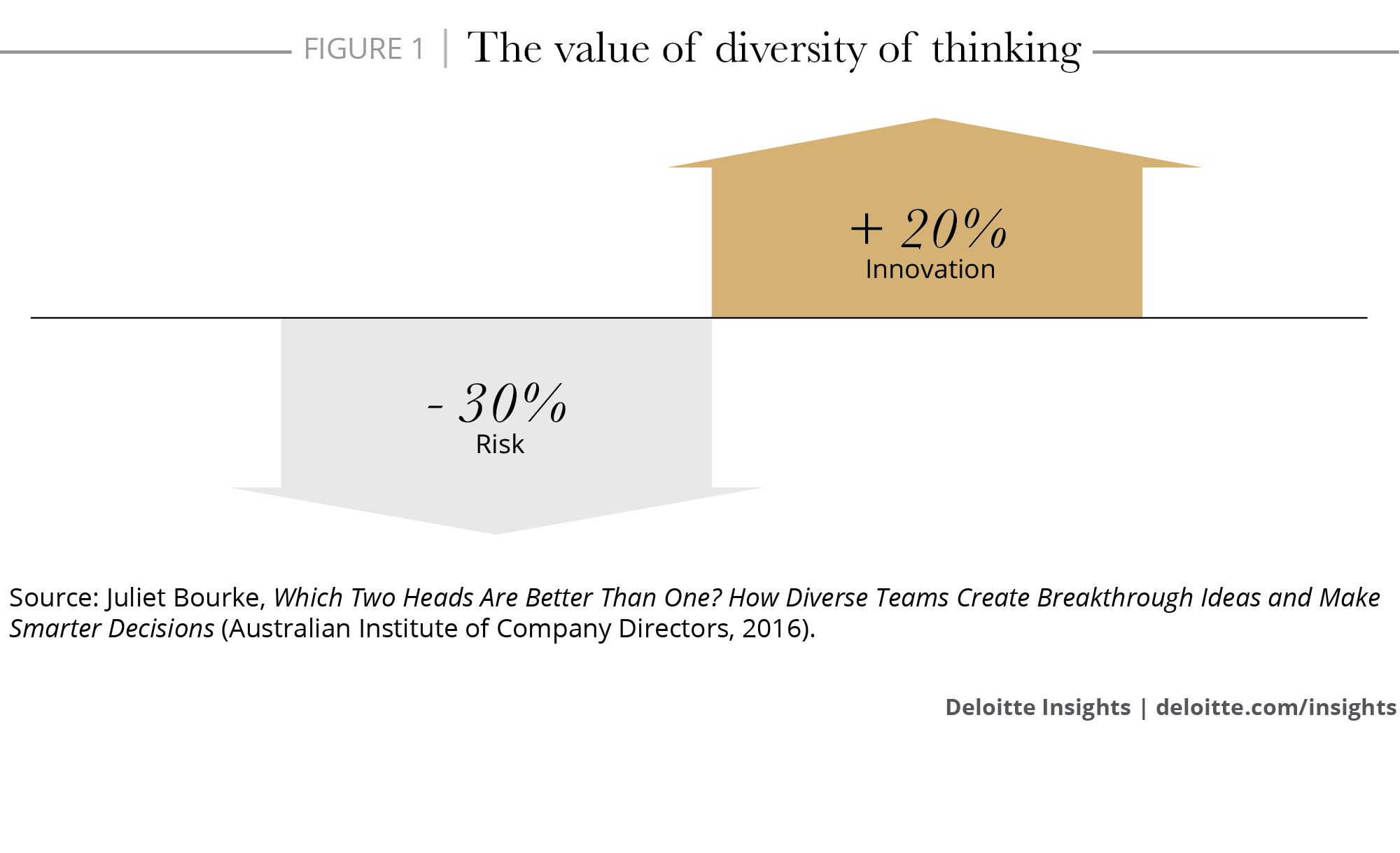
The value isn't just speed. It's making smarter decisions because you're learning from people who've already made the mistakes you're about to make. To that end, a Deloitte report shows that diverse thinking (which you get from communities) can improve decision-making quality by 20% and cut risk by 30%.
2. You Stop Wasting Money on Things That Don't Work
Here's an uncomfortable truth: most marketing advice is wrong for your specific situation.
The blog post telling you to post on TikTok three times a day? Might work for consumer brands with video resources. It’s terrible advice for a B2B service business run by one person. The guru saying you need a $5,000/month ad budget? Maybe true for established companies. Completely impractical for a bootstrapped startup.
Marketing communities help you filter advice through the lens of "does this make sense for someone in my actual situation?" You can ask: "I'm a solo founder selling to small businesses, should I be focusing on Instagram?" And someone who's been exactly where you are will tell you the truth. This saves you from spending months and thousands of dollars testing tactics that were never going to work for you.
3. You Learn What Actually Matters (Not What's Trending)
Marketing blogs will tell you that you need to be on every platform, posting constantly, building funnels, running ads, creating video content, writing newsletters, and somehow also doing thought leadership on LinkedIn.
It's overwhelming because it's unrealistic.
Marketing communities ground you in reality. You see what other solo marketers and small business owners are actually doing. You get the inside scoop on what's taking up their time and generating results. You learn that the successful freelancer you admire only uses two marketing channels, not twelve. And that the founder, who seems to be everywhere, is really just consistent on one platform.
This perspective is invaluable when you're trying to build a business without a big marketing team. You need to know what to ignore, not just what to do.
4. You Get Feedback Before You Launch (Not After It Fails)
Launching a campaign that doesn't work is expensive. You've spent time creating assets, maybe spent money on ads or tools, and now you're back to square one trying to figure out what went wrong.
Marketing communities let you get feedback before you invest resources. Post your landing page headline and find out if it's confusing before you send traffic to it. Share your email campaign and learn if you buried the important part before you hit send to your entire list. Show your ad creative and discover if it doesn't make sense to anyone.
This preventive feedback is one of the highest-ROI aspects of community membership. Every failed campaign you avoid saves you weeks of work and potentially significant budget.
And it's not just about avoiding failure. Community feedback helps you identify what's actually good about your marketing. You often can't see your own strengths. Someone else pointing out "this part of your messaging really works" helps you do more of what's already working.
5. You're Not Alone When Things Aren't Working
Marketing can be incredibly discouraging when you're doing it alone.
You launch something you worked hard on, and it gets no response. You look at competitors who seem to be crushing it while your efforts feel like pushing a boulder uphill. In isolation, these moments spiral into something worse. The questions pile up: Am I any good at this? Will my business work at all? Should I just give up on marketing and hope word of mouth handles everything?
A community changes this. You share what happened, and people respond with "I tried that too, and it didn't work either." You realize the tactic wasn't right for your situation, or your timing was off, or you needed to adjust one specific thing.
This isn't just emotional support (though that matters). It's a practical perspective that helps you adjust and try again instead of giving up.
What to Look for in a Marketing Community
Not all marketing communities will actually help you. Some are too big, and your questions disappear. Some are full of people selling courses instead of sharing real experiences. Some are designed for corporate marketers with teams and budgets you don't have.
.jpg)
Here's what actually matters when you're evaluating communities as a solo marketer or business owner:
Small enough that people know you. In a community of 10,000 people, you're anonymous. In a community of a select few, people remember who you are and what you're working on. That familiarity makes feedback more relevant and connections more real.
Structured enough to stay active. Communities without regular programming tend to die. Look for weekly sessions, office hours, or recurring events that give you reasons to show up consistently.
Experienced people who actually respond. The value isn't in having access to experts. It's in having experts who actively participate and give real feedback. Make sure the community includes people who've done what you're trying to do, and that they're actually engaged.
Focused on practical help, not networking theater. Some communities are all about making connections for the sake of connections. You need a space where people share real work, give honest feedback, and help each other solve actual problems.
Moderated to stay useful. Without moderation, communities become spam festivals where everyone's promoting something, and nobody's helping anyone. Good moderation keeps the focus on genuinely useful conversations.
Why Heartwired Club Was Built for This
Most marketing communities aren't designed for small business owners or people doing marketing alone. They're built for agency marketers or corporate marketing teams.
Heartwired Club was built specifically for founders, solo marketers, and freelancers who need practical help with the marketing they're actually doing. The community is small by design—small enough that you'll actually get personalized feedback on your work, not just generic advice.
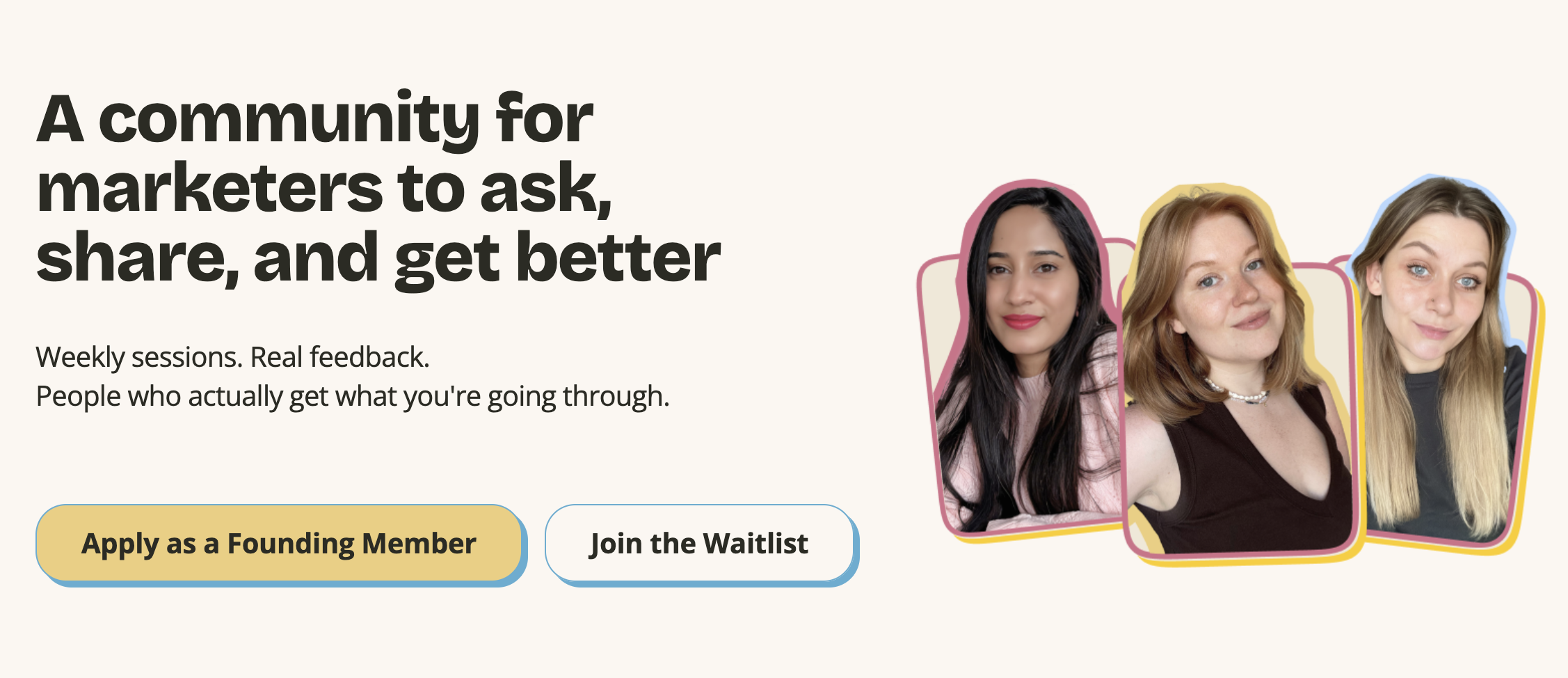
Dasha Petrova is leading the community:
As Head of Community, Dasha builds spaces where people feel seen, connected, and challenged to grow. Heartwired is her fourth community baby—she's been building and running communities for over 10 years. She's the one making sure this stays warm, useful, and never turns into another dead Slack.

The rest of the team brings real marketing experience:
Founder Iza Tomica drove 25% month-over-month growth through marketing at multiple companies. Deepti Nickam has beaten Forbes in Google rankings. Márcia Marques has generated $300K through email marketing. These aren't people who theorize about marketing; they've done it, scaled it, and know what works.
The structure supports real progress:
Weekly live sessions where you bring whatever you're stuck on and work through it with people who've solved similar problems. Not generic advice. Specific feedback on your actual situation.
Office hours where you post your work (your landing page, your email, your positioning) and get detailed feedback from the Heartwired team. Deepti Nickam has beaten Forbes in Google rankings. Márcia Marques has generated $300K through email marketing. They review your work and tell you what actually needs to change.
Monthly themes that structure learning without feeling like school. One month might focus on positioning, another on content strategy, another on email marketing. You're learning the fundamentals that matter while getting help with your specific challenges.
Resource library with frameworks and templates you'll actually use. Not 47 PDFs you'll never open. Practical tools for the marketing tasks you're doing right now.
This is for you if:
- You're a founder building a business and handling marketing yourself
- You're a freelancer who wants to improve your own marketing to attract better clients
- You're the only marketer at a small company, with nobody to ask for feedback
- You've tried other communities and found them either silent or full of people selling courses
- You're tired of second-guessing every marketing decision
The founding member cohort is limited because they're building this with input from the first members. Founding members get free access for a full year and help shape what the community becomes.
Apply as a founding member now.
After the founding period, membership costs €47/month. That's less than one therapy session about marketing stress, less than most marketing tools you barely use, and significantly less than the money you waste testing tactics that someone could have told you wouldn't work.
The application includes a 15-minute conversation to make sure it's a good fit. This keeps the community focused on people who are actually doing the work, not just consuming content about marketing.
The Reality: You Can't Do This Alone Forever
Marketing is hard enough when you have a team. Doing it completely alone is unnecessarily difficult.
If you're ready to stop being the only person who understands marketing at your company, if you want feedback on your work from people who've actually built businesses and driven growth, if you're tired of guessing whether your marketing makes sense, Heartwired Club is worth exploring.
Apply as a founding member while spots are available.
Find your people, share generously, and get better at this together.